
Welcome to the sncəcmałqtn Agricultural Park in Greater Vernon, BC, also known as SAP, situated on the ancestral lands of the Syilx/Okanagan people. sncəcmałqtn translates to "place of small crops or garden."
In February 2025, the Vernon Permaculture Group was given the incredible opportunity to create a community food forest and medical garden on a three-quarters-of-an-acre plot of land, and I took on the role of assisting it in coming to life.
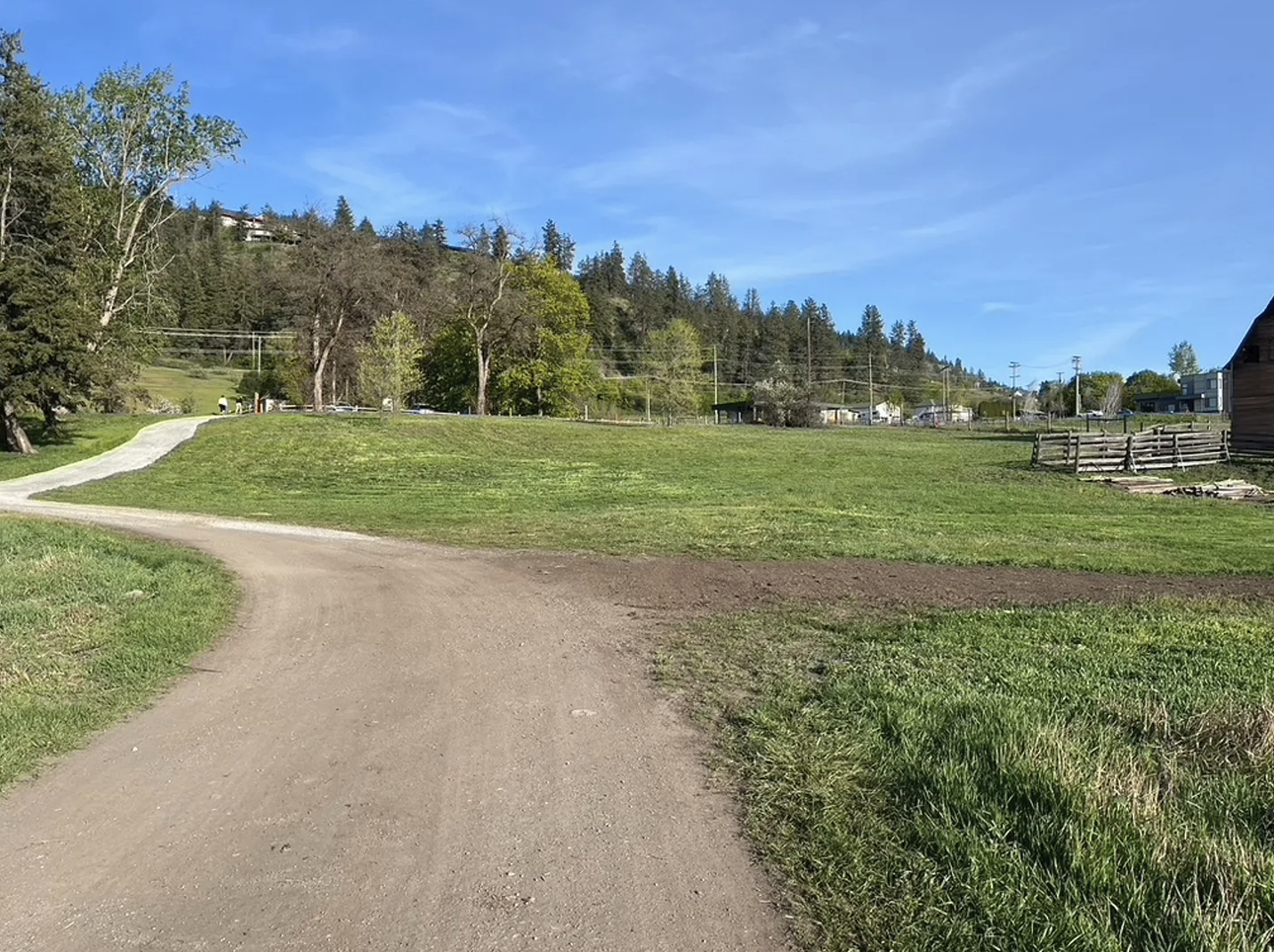
What the site originally looked like. The author’s photo.
A food forest can be described as a deliberately designed, multi-layered, high-yielding, perennial plant system that provides food, food security, and herbal medicine while mimicking the multi-layered structure and function of a forest. A food forest increases biodiversity, attracts pollinators, beneficial insects, birds, and wildlife, and enhances soil health. It can provide fodder for animals, fuel, beauty, calm, and community connections, among other benefits.
I knew I wanted to be involved in the project, as for a few years, I have been studying permaculture, herbology, and the soil food web, while creating a food forest in my front and backyard.
What I did not know is that when I put my name down as a "lead," this project would completely consume my life for 5 months.
Cabin Resources created a preliminary design for the food forest area, as shown in the picture below, and the rest was left to volunteer efforts to bring it to life.
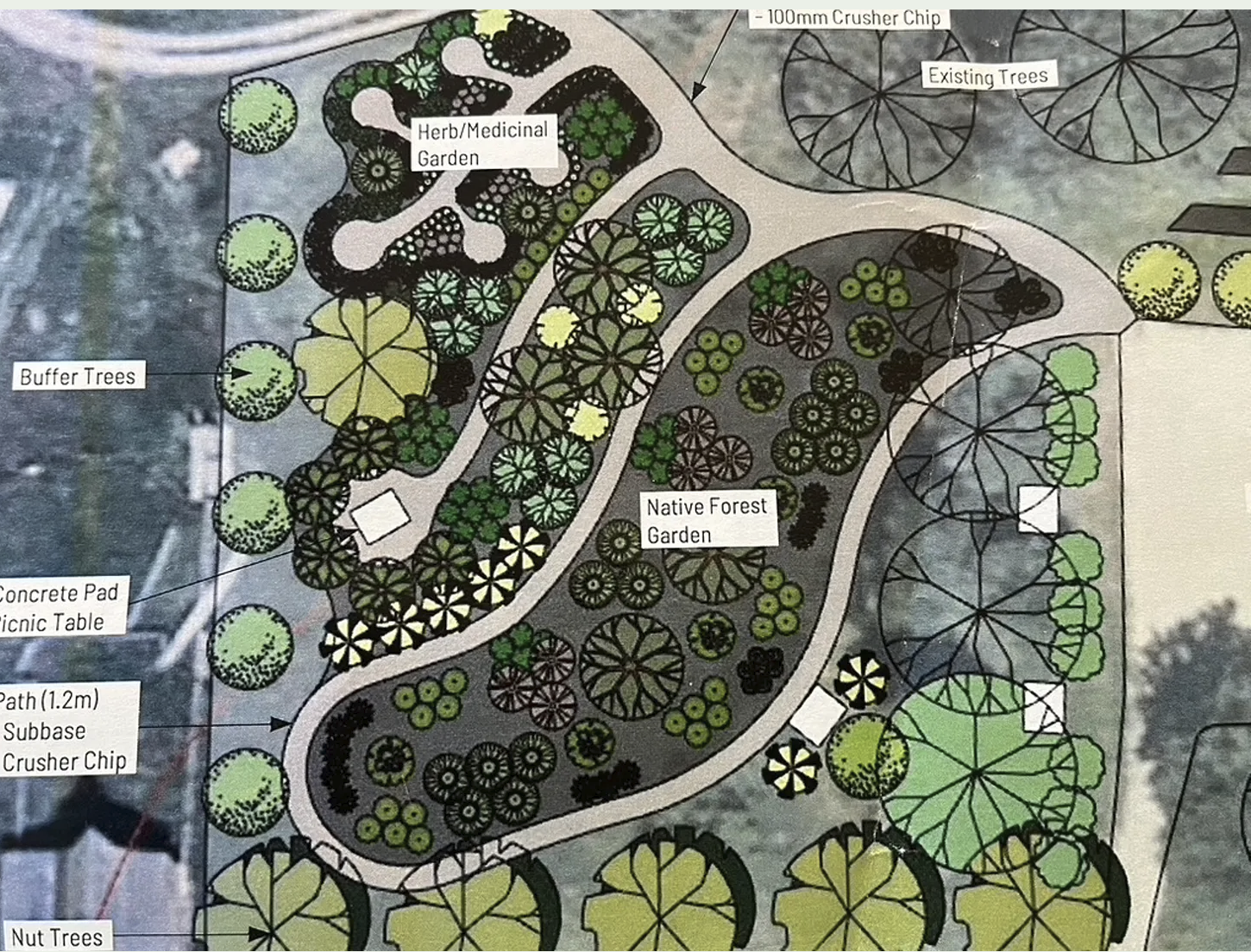
Cabin Resource’s design.
The first thing I did was to begin creating a plant list. I broke it down into ground covers, medicinal herbs, perennials, nitrogen-fixing plants, shrub layers, understory plants, and canopy trees. Then I asked if the local community had any plants to donate to the site, and we gratefully received many! Additionally, we received a $ 6,500.00 grant to purchase plants.
It was essential to create some guidelines around the plants that were chosen, which became:
Nothing invasive, no aggressive spreaders; they were native and drought-tolerant (when possible), are edible (when possible), have medicinal qualities (when possible), attract pollinators, beneficial insects, and birds, and serve a function amongst the whole.
Then I created a booklet that summarized each plant, including its function in the food forest, its native habitat, and its size.
It is ideal to begin ordering plants the previous fall for the Spring, but that was not an option, so we did the best we could at finding available plants. There will be many more coming next Spring.
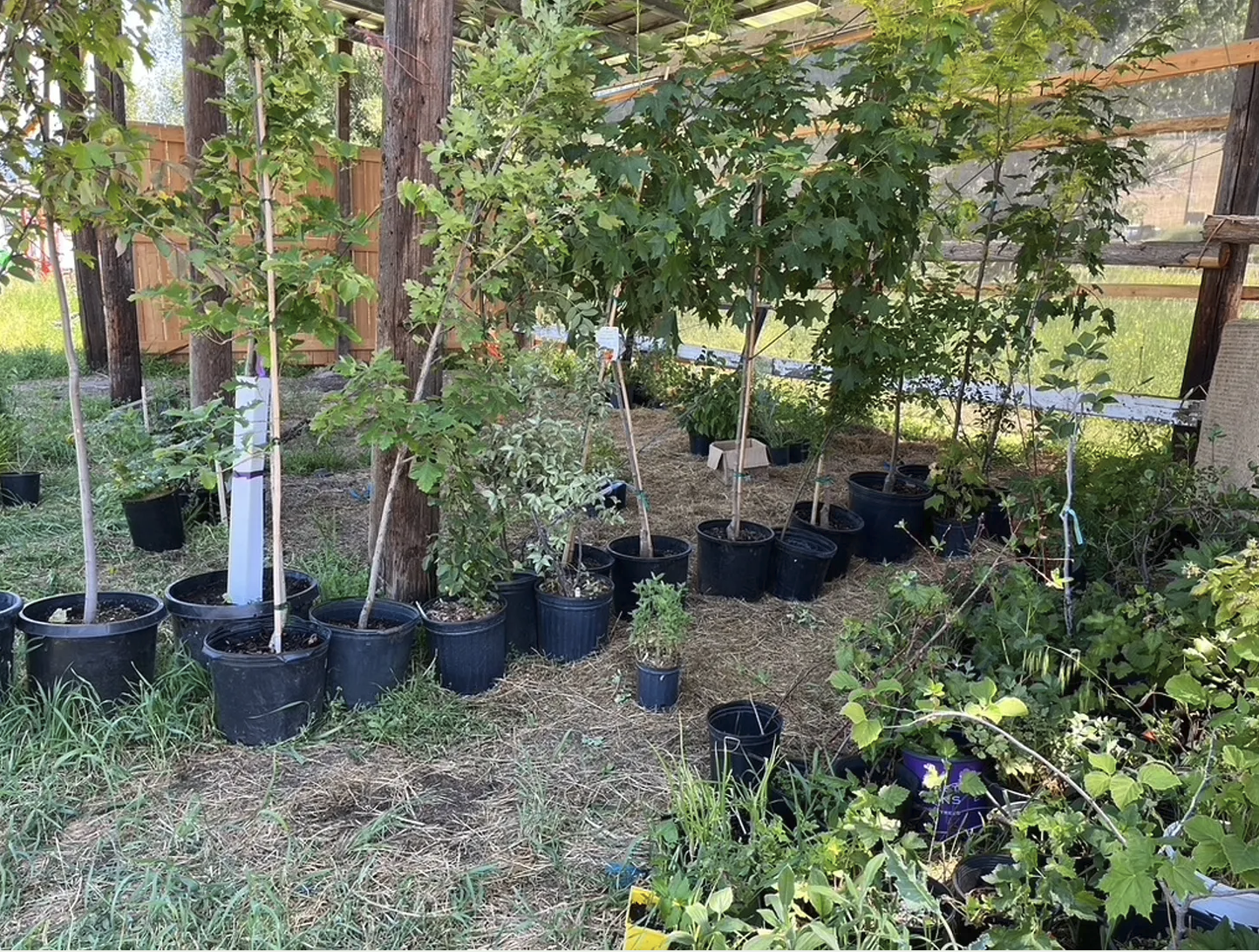
Some of the plants awaiting planting. The author’s photo.
I worked on a design for the medicinal garden (which has many pollinator plants) that included five keyholes:
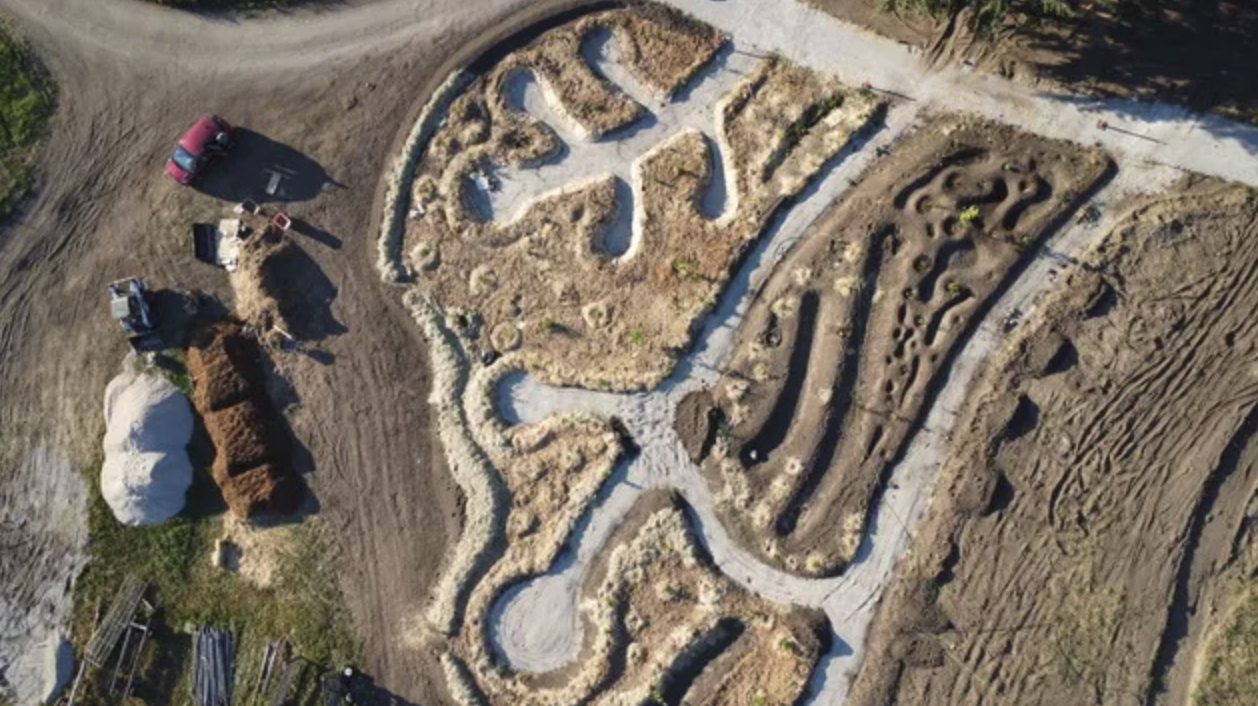
Drone shot by Bruno Guenette
#1 - contains traditional herbs we know.
#2- contains herbs that can be used for pain, inflammation, swelling and wounds (and a few with kidney beneficial herbs).
#3- contains calming herbs.
#4- contains herbs with immune system, cough, and respiratory benefits (and some for digestion).
#5- contains herbs that might be interesting or beneficial to children.
Then I planned the surrounding areas, extending into the food forest and the second level of the food forest.
Pathways needed to be created throughout.
I had learned about the theory of earthworks in my studies, but applying it to a site of this size and slope, with no hands-on experience, made me feel completely overwhelmed. Stefan and Janet, a couple of wonderful people from the group, helped keep me sane during this time. I reached out to a handful of people with more experience in this regard, but had no luck....
And then Evan magically appeared (which I will be forever grateful for) with his infectious enthusiasm, knowledge, earth artistry and uncanny ability to read and sculpt the landscape, and the incredible amount of time he has dedicated to this project, and with the help of Kim, Bob, and Lyle, who moved and placed 36 truckloads of soil, and many volunteers who helped move it around, creating the structure beautiful and functional riverine system that now exists!
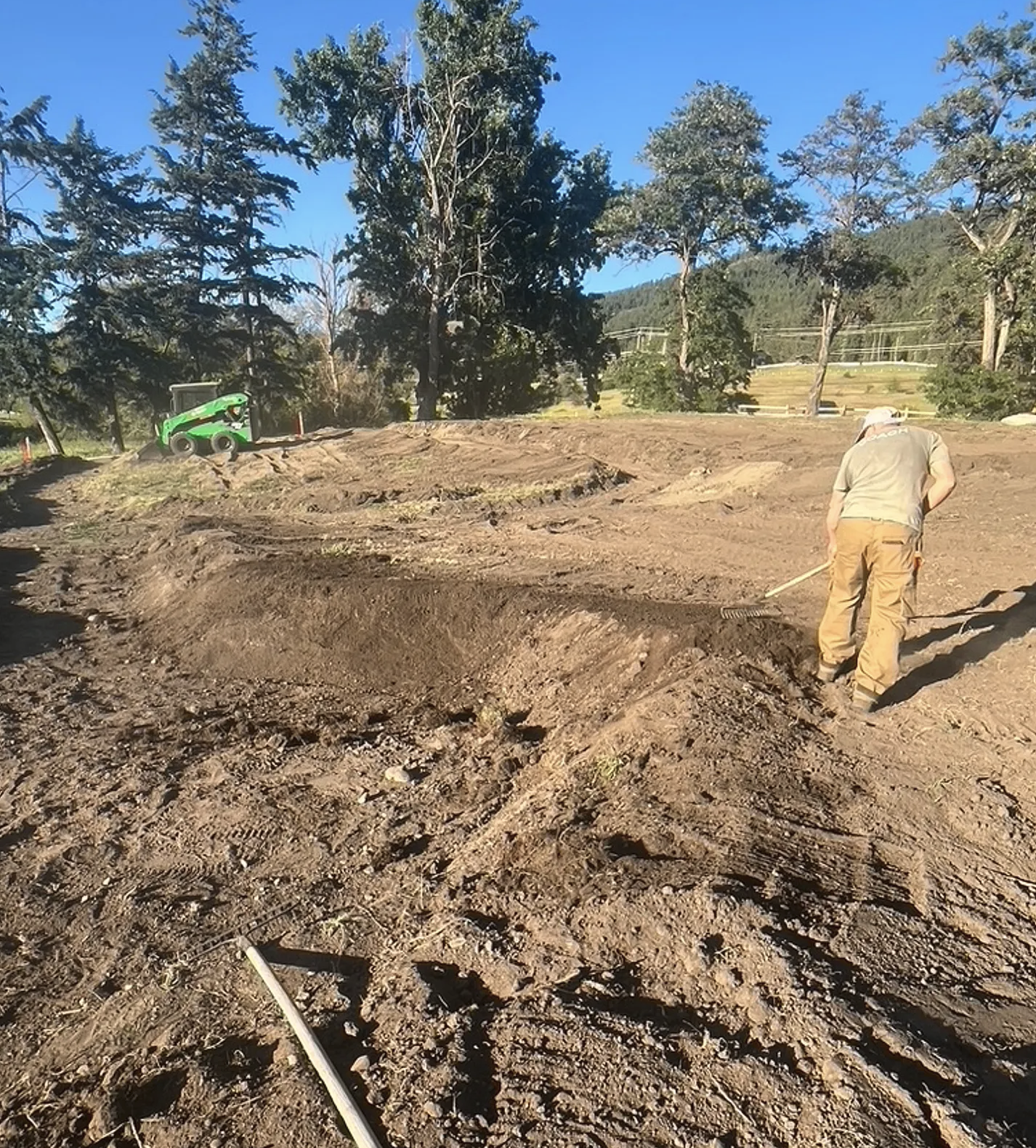
Evan is Earth sculpting, and Kim is beginning to create swales in the background. The author’s photo.
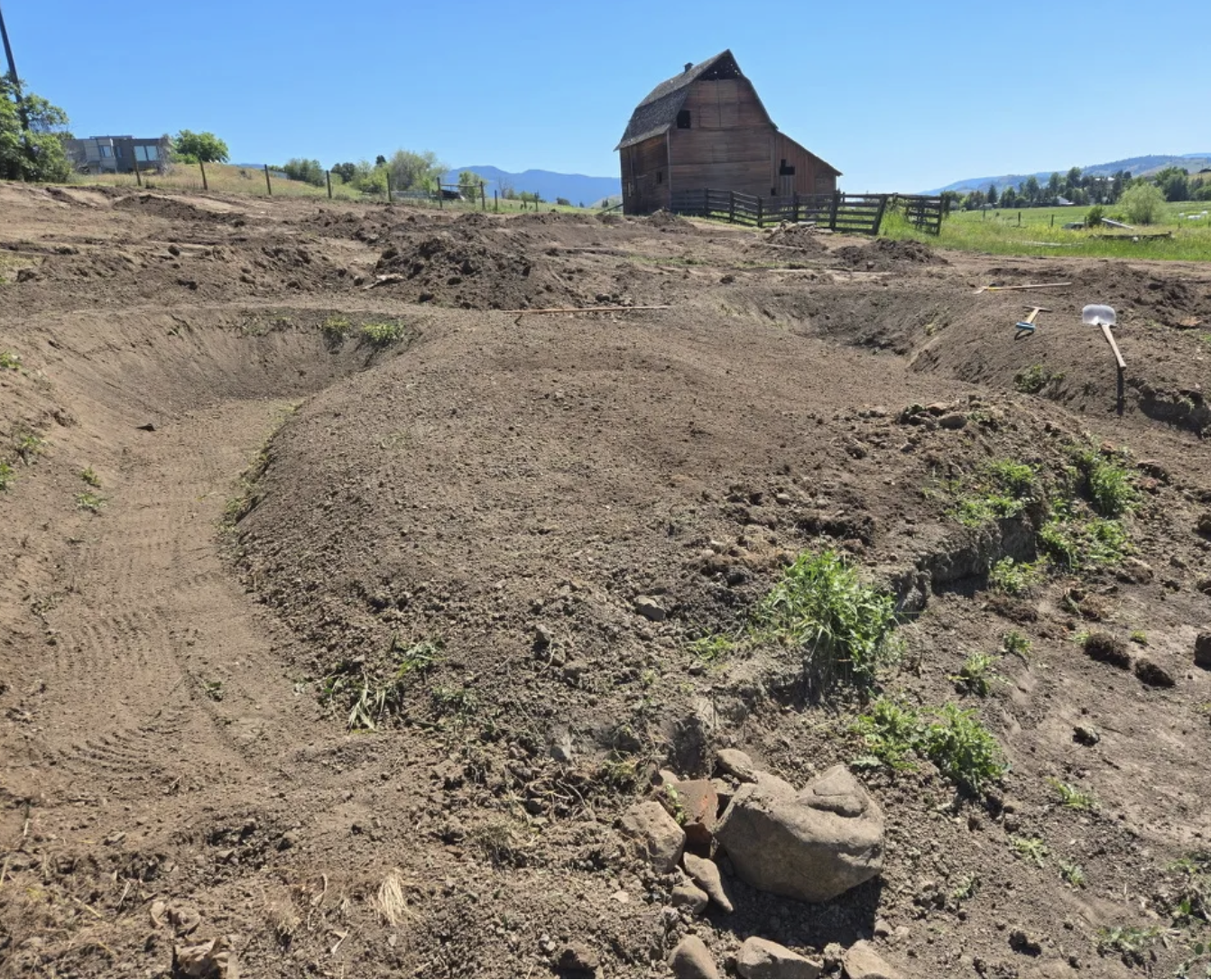
The results of Evan’s Earth sculpting. The author’s photo.
Then the time finally came to plant, and with the help of many volunteers, the plants were sorted into nine groups and planted within the next couple of weeks.
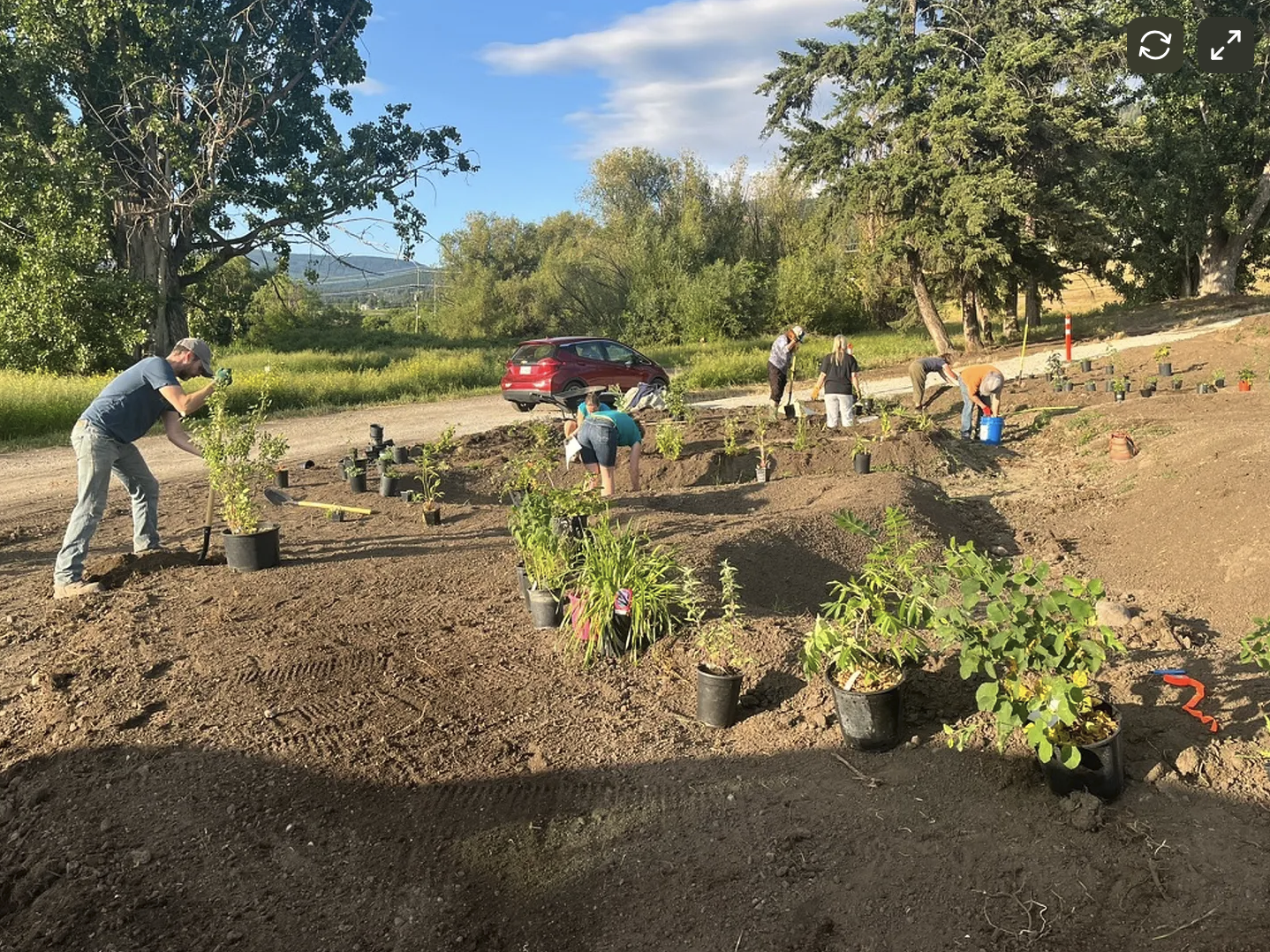
We were excited to begin planting! The author’s photo
Now, the middle garden was being sculped and swales created.
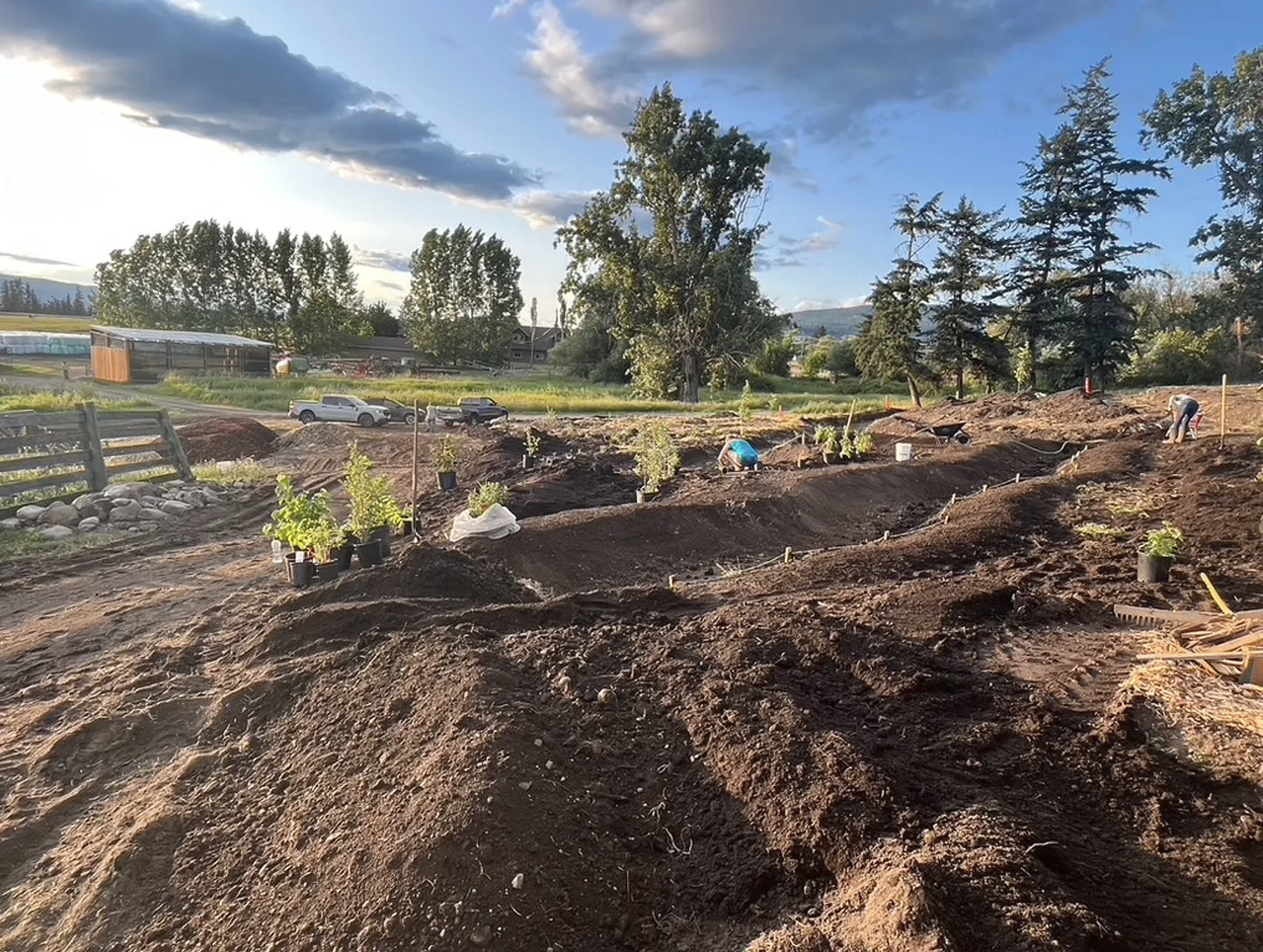
One of many swales. The author’s photo.
All bare soil, including the area around plants, needs to be covered with woodchips, straw, or cardboard to suppress weeds, retain moisture, and increase the soil's acidity, mimicking a forest system.
We had the blessing of donated straw, woodchips, bags of leaves, which were collected in the Spring, and coffee bags to cover the banks until next year, as well as to try and hinder the bindweed, etc.
This project and permaculture are so important to me because I feel that much of human life is out of step with the natural world and its rhythms, not to mention the need for community and to connect with our unique inner callings. Furthermore, I believe that many systems are broken, including the current food system. Creating food forests in our yards, on land, and in parks is one way to increase food security, access to herbal medicines, enhance biodiversity, and foster community engagement.
For many years, I have been seeking deep and meaningful community connections, working together towards a common goal. I have certainly found what I was searching for in this project and have met incredible people who feel like family; I could not be more grateful!
Thanks to the many dedicated volunteers, what we have accomplished in four months is truly astounding! Now that we are nearing completion on phases one and two, we have begun playfully planning the large third phase. Ongoing maintenance is required, and more will be planted in the Spring.
I look forward to introducing this project to the community, watching it grow and evolve into a more mature forest system that provides an abundance of food, connections and friendships, and for all that is to come!
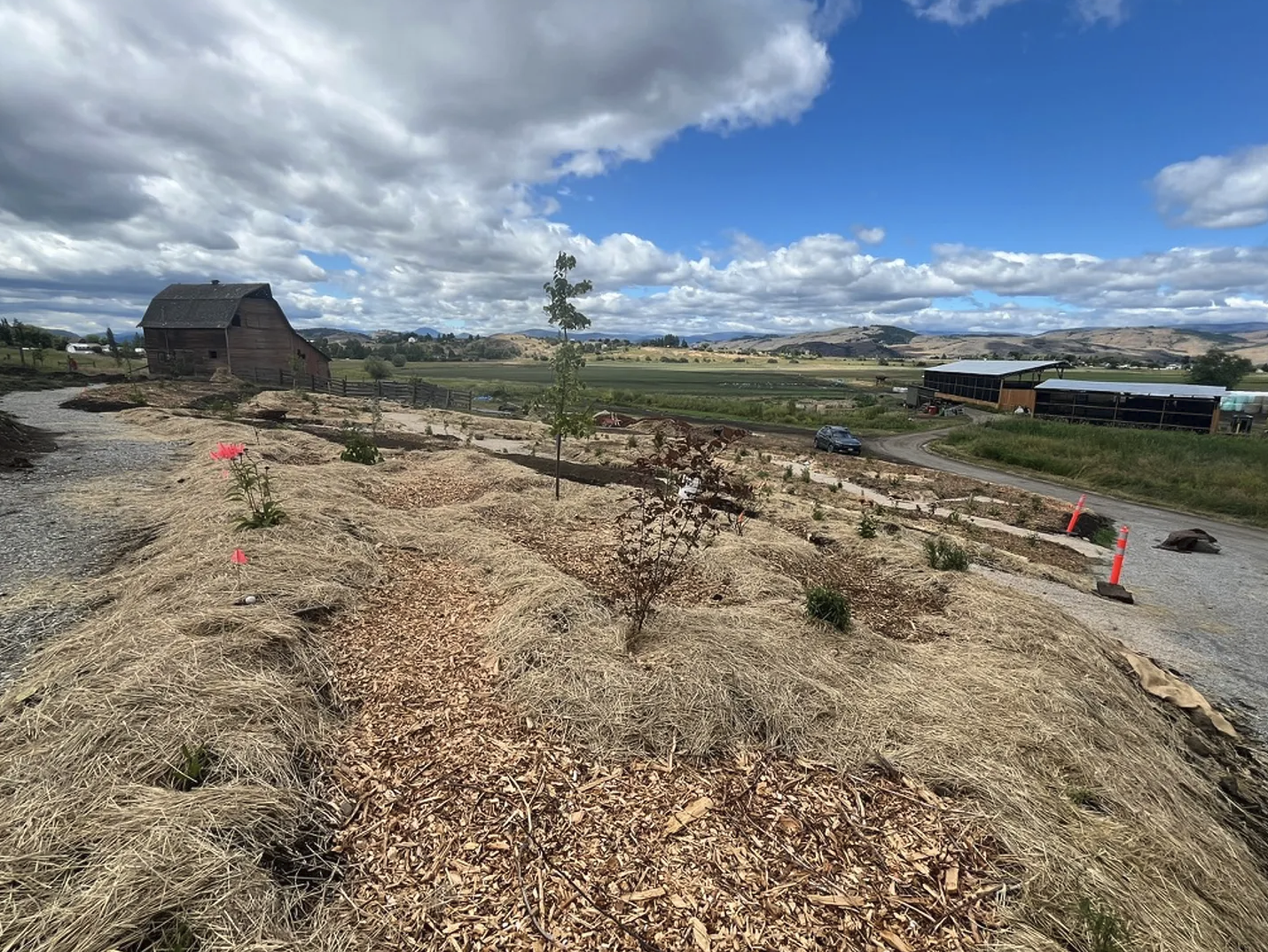
The completion of the first year. Aug 2/25. The author’s photo.
We created a Facebook page if you are interested in the evolution of the sncəcmałqtn food forest in Vernon, BC, Canada. We have begun year two (2026) by expanding the food forest in the large space at the top of the hill.
It is my passion is to assist others in creating food forests and/or medicinal gardens on their property or land.